Posts

Chuck Close

I was introduced to Chuck Close’s work in a heartfelt documentary, “Herb & Dorothy,” which I reviewed here earlier. As savvy-art collectors, Herb & Dorothy collected works of emerging but talented artists in the two decades following the Sixties; their small apartment housed works of artists Lucio Pozzi, Chuck Close, Christo & Jeanne-Claude,Will Barnet, and Sol LeWitt. Later, these artists profoundly influenced the contemporary art scene, which was prevalent in New York in the Seventies and Eighties. With the passage of time, and through positive feedback and reviews from art-lovers and critics, Chuck Close was rightly associated with the elite group of modern expressionist artists that still exists today. Marion Cajori’s insightful new documentary, “Chuck Close,” explores Chuck Close’s unique portraiture style along with thoughts from fellow artists and critics. The documentary begins with Close undertaking an ambitious project of building his massive-scale portrait. Th...
A Prophet (BD)

Image
There is no doubt that the prison-drama genre has its fair share of great flicks. From contemporary films like “Dead Man Walking” (1995) and “The Shawshank Redemption” (1994) to early prison movies like Renoir’s “La Grande Illusion” (1937), Bresson’s “A Man Escaped” (1956), and Rosenberg’s “Cool Hand Luke” (1967), these movies have generated enough fanfare worldwide with their themes of friendship, captivity, isolation, and escape. Evidently, apart from the two TV shows “Oz” and “Prison Break,” the prison genre is gradually becoming a dying genre. So, when I saw Jacques Audiard’s “A Prophet” early this year in a theater, I was pleasantly surprised and entertained, though I didn’t warm to it upon my initial viewing. “A Prophet” was a winner of the Grand Jury (second-most prestigious award after the Palme d’Or) award at the 2009 Cannes Film festival. Additionally, it won nine Caesar Awards (French equivalent of Oscar Awards) along with an Academy Award and Golden Globe Nomination in the ...

Kick-Ass (BD)

Image
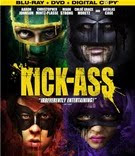
“Who am I?” “I am Kick-Ass.” In the opening sequence, we hear the main protagonist speak these words in the form of a short introductory narration. Not only does the dialogue refresh our memory of the classic superhero Spider-Man, but it also presents us an ordinary human being who aspires to be a superhero someday. Irrespective of the medium, superheroes have always been active and omnipresent through comics, videogames, and movies. Of course, there is no dearth of superheroes: Spider-Man, Batman, Superman, the X-Men, the Watchmen, the Incredible Hulk, the Fantastic-Four, and many more, have forever ruled the hearts and minds of their fans, but “Kick-Ass” is a different tale altogether. None of the heroes in “Kick-Ass” have been part of accidental experiments, and they possess no superhuman qualities of their own like traditional superheroes. Being ordinary human beings, the heroes have an unwavering drive from within to fulfill their itch of being superheroes. Writer-director Mat...

Rambo (BD)

Image
When the first movie in the “Rambo” series, “First Blood” (1982), was released, the “Rocky” series was already in its third offering, “Rocky III” (1982). It became increasingly clear that each sequel in the two series was worse than its predecessor. Over the years, the characters of “Rambo” and “Rocky” became fodder for countless parodies. Weird Al Yankovic’s “UHF” (1989) poked fun at “Rambo” by copying Rambo’s action sequences and his dialogue delivery style that now has its own cult following. No doubt by the late Eighties: “Rambo” and “Rocky” were shunned and renounced by critics and moviegoers. Then in 2008, Stallone decided to resurrect his American Hero, John Rambo, in “Rambo,” perhaps for the last time. The movie was well received by audiences and became a decent earner at the box office. In the story, John Rambo (Sylvester Stallone) now lives in Thailand in an area close to the Burmese border. He makes his living by hunting snakes and selling them in a nearby local region. ...

Mother (BD)

Image
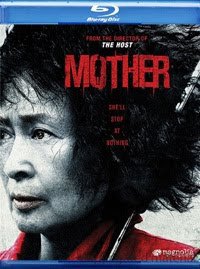
The South Korean director Bong Joon-ho has a Midas touch; movies he wrote and directed have become big blockbusters in South Korea. His second movie, “Memories of the Murder” (2003), became the most-watched movie of 2003. Then in 2006, he directed his biggest blockbuster, “The Host,” for which he not only cemented his place as one of the top directors in South Korea but consistently appeared in the list of top international directors. Following the success of “The Host,” he returns after a gap of three years to direct and cowrite the critically acclaimed “Mother.” Bong Joon-ho along with Park Chan-wook (“Oldboy,” “Joint Security Area,” “Lady Vengeance”) and Kang Je-gyu (“Tae Guk Gi: The Brotherhood of War,” “Shiri”) represent a new breed of young, talented South Korean directors who have time and again created some remarkable films. Mother (Kim Hye-ja) lives with her son, Do-joon (Won Bin), and through a small shop in her house she sells herbs and practices acupuncture, alt...

Johny Handsome (BD)

Image
Director Walter Hill became popular after the huge success of “48 Hours” at the box-office. He is also one of the producers of the “Alien” series. “Johnny Handsome” (1989) follows a similar pattern and style as seen in “48 Hours,” “Red Heat,” and “Extreme Prejudice” in that it deals with redemption and revenge. Add to this mix cops chasing bad guys and double-crossing, and you have a thriller that pays homage to Forties’ film noirs as well as Western movies. “Johnny Handsome” arrived in the late Eighties, following the cult success of “Angel Heart” in which Mickey Rourke played as an obsessive private investigator. Nonetheless, it was also the time that started the slide for Mickey Rourke: “Wild Orchid,” “Desperate Hours,” and “Harley Davidson and the Marlboro Man” all failed at the box-office. The big projects faded for him, and Hollywood kind of shunned him. Of course, “Sin City” and “The Wrestler” and the recent, “Iron Man 2” brought him back to the big leagues of Hollywood. I...

Raajneeti

Image
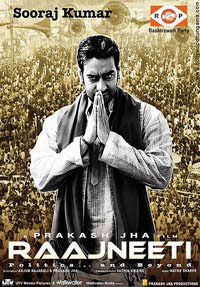
The Indian religious mythological tales “Ramayana” and “Mahabharata” continue to fascinate Indian filmmakers. Ramanand Sagar’s “Ramayana,” an epic TV series from the late 80’s (1987-1988), chronicled the holy tale of Ram and his battle against the evil King, Ravaana, becoming the first TV series to present the epic on a grand scale. Following the success of the “Ramayana” series, B.R. Chopra in the late 80’s (1988-1990) took on the ambitious project of creating a TV series of the biggest mythological tale in Indian history, the “Mahabharata.” The series was watched by more than half a billion people during the course of its run. The impact of both of the series was immense on Indian culture; it immediately refreshed memories of fabled Indian characters, gods, and their stories. Undoubtedly, by the time both of the series were over, people became more aware of their traditions in relation to religion and the battles that defined India’s history. Even so, the series had a bigger infl...